
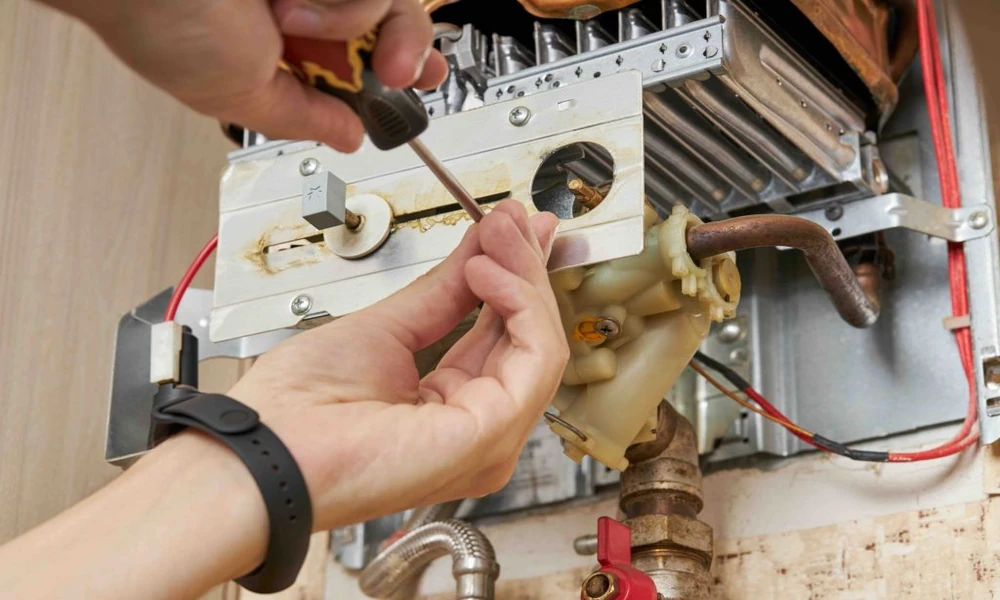
The average tank water heater lasts a little over a decade, and I have watched a friend kill two of them in under nine years. Both times the cause was the same thing, and it was not hard water or bad luck. It was the simple assumption that if hot water still came out of the tap, nothing needed doing.
That assumption is expensive. A tank that gets a yearly flush and a fresh anode rod can comfortably outlive its rated lifespan by years, while a neglected one starts leaking into your closet floor and drops your shower time to four minutes. I would rather spend forty minutes a year on maintenance than write a check for a new unit.
So here is the plan. You will learn the two jobs most people skip, the parts that actually wear out, and how to judge repair versus replacement without guessing.
Why Your Water Heater Fails Long Before It Dies
A tank is a steel shell lined with glass and fitted with a sacrificial rod. The rod dissolves instead of the steel, which is the whole trick. Once that rod is gone, your tank starts rusting from the inside, and by the time you see rusty hot water, the damage is already underway.
Sediment is the other quiet killer. Minerals settle on the burner plate and the tank bottom, so the flame has to heat through a layer of chalk before it reaches water. You get popping and cracking sounds, higher gas bills, and a shortened life.
According to the U.S. Department of Energy, water heating is one of the largest energy expenses in a typical American home, second only to space heating and cooling in many households. That is your money quietly going up the flue every month the tank is limed up.
Here is my honest stance: if your tank is over eight years old and you have never flushed it, do not schedule a flush. Sediment can be plugging the pinholes that would otherwise leak. Have a plumber inspect it first.
The Two Jobs Almost Nobody Does
Homeowners are pretty good about testing the temperature and pressure relief valve. They are terrible about the anode rod and the flush. Those two items are, in my experience, the entire ballgame.
Everything else on a water heater falls into one of two buckets: checks you can do in five minutes, and work that belongs to someone with the right tools. Know which bucket you are in before you start.
- Anode rod: pull and inspect it every two to three years. Replace it when more than half the core wire is exposed.
- Flush the tank: drain a few gallons from the bottom valve every six to twelve months to push out loose sediment.
- Relief valve: lift the lever twice a year and confirm water flows and stops cleanly.
- Temperature setting: keep it at 120 degrees Fahrenheit unless your dishwasher needs hotter.
- Venting and combustion air: check that the flue is clear and the area around a gas unit is not boxed in.
Should You Repair or Replace? A Simple Test
Skip the vague advice and run two numbers instead. I call it the Half-and-Half Rule, and it has kept me from guessing on every tank I have ever owned.
The rule: if the repair quote is more than half the price of a new installed unit, or the tank is more than half its expected lifespan old, replace it. If neither is true, repair it. If only one is true, get a second opinion because you are right on the line.
A leak from the tank body itself is different. No repair fixes a rusted-through shell, and you should shut off the water and gas or power before calling anyone.
One more scenario worth naming. A homeowner in Butte with a ten-year-old gas tank, a cold shower, and a service call that quotes a thermocouple replacement for a fraction of the cost of a new unit should take the repair every time. Same homeowner with a leaking tank base and a quote near half the replacement price should not.
What the Standards Actually Require
Most people never think about why a water heater is built the way it is, and that gap matters when a plumber tells you a part is required.
Modern storage tanks are designed and tested against published safety standards. The National Institute of Standards and Technology works with standards bodies that set these technical baselines, which is why you see certain fittings on every new unit sold in the United States.
That also explains why some “optional” work is not optional. A properly sized thermal expansion tank, correct venting, and a working relief valve are code items, not upsells. If a technician skips them to save you money, find a different technician.
Flushing Your Tank: A Fifteen Minute Walkthrough
Want to do the annual flush yourself? It is a genuinely easy job, and here is how I do it.
- Shut off power at the breaker, or set a gas unit to pilot.
- Close the cold water inlet valve on top of the tank.
- Attach a garden hose to the drain valve and run it outside or to a floor drain.
- Open a hot water faucet somewhere in the house to let air in.
- Open the drain valve and let it run until the water clears.
- Close the drain, close the faucet, reopen the inlet, then restore power.
If the drain valve clogs on the first try, that is your sediment telling you the tank has been ignored for years. Stop and get help rather than forcing it.
When to Call a Plumber
Do the easy stuff yourself. Call a professional the moment you see water pooling, smell gas, or hear the tank rumbling like a kettle. Those are not maintenance problems, they are repair calls, and guessing at them is how small jobs turn into flooded floors.
Here is the part I am opinionated about. For anything beyond a flush and an anode swap, I would rather hand it to someone with the tools, the parts, and the warranty behind the work. Around here that means hiring water heater repair services in Butte, MT rather than improvising with a wrench and a video at eleven at night.
The Environmental Protection Agency notes that energy efficiency programs exist precisely because home systems perform better when they are maintained to spec, and a water heater is no exception. A technician with a combustion analyzer and a proper flush pump catches things a homeowner cannot.
So run the Half-and-Half Rule, keep an eye on that anode rod, and stop treating “the water is still hot” as proof that nothing is wrong. Your shower, your energy bill, and your closet floor will all thank you. What is the last time you actually checked your tank?

Comments are closed.